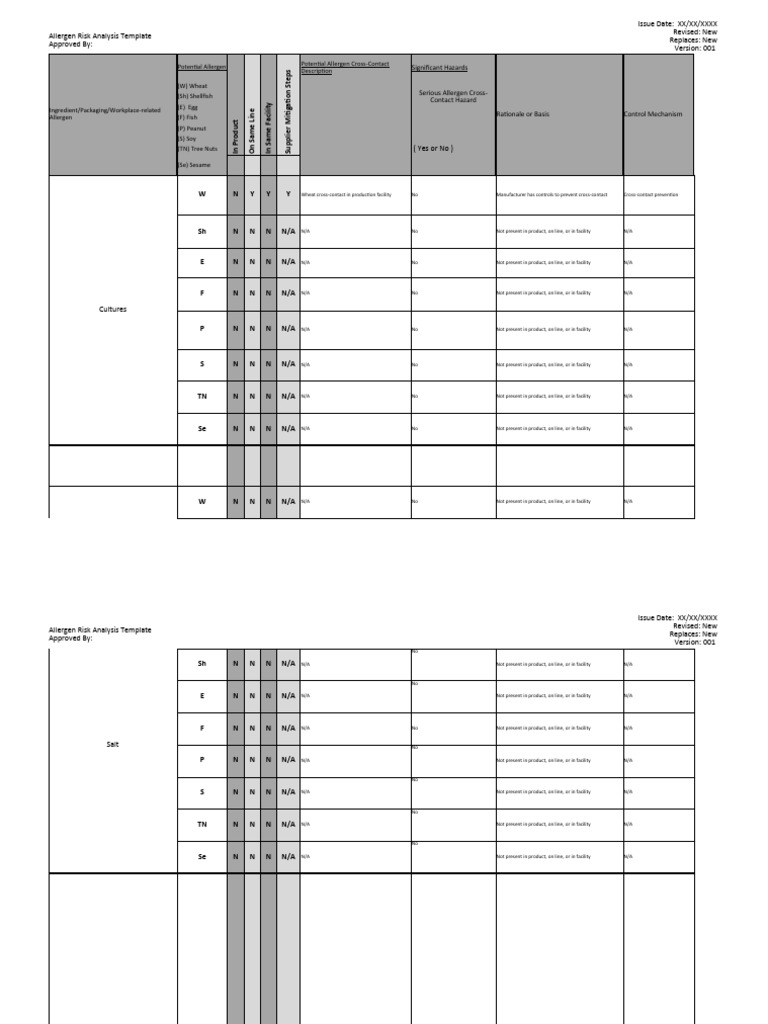
Allergen Statement Template
Allergen Statement Template - Allergens can be airborne or can arise from contact with your skin, from. These substances are known as allergens. The allergic reaction occurs if the person inhales,. As a result, the immune system. The immune system contains several mechanisms that normally protect the body against allergens. Learn what allergies are and what causes them. In technical terms, an allergen is an antigen. Allergies are your immune system’s overreaction to foreign substances. An allergen is an otherwise harmless substance that triggers an allergic reaction in sensitive individuals by stimulating an immune response. Allergies develop when a person’s immune system overreacts to substances that are usually harmless. An allergy is an immune system response to a foreign substance, or allergen, that’s not typically harmful to the body. Allergies are your immune system’s overreaction to foreign substances. Allergens may be inhaled, ingested (eaten or swallowed), applied to the skin, or injected into the body either as medication or inadvertently by an insect sting. Allergic reactions are symptoms that result from your body creating these antibodies. Allergens are typically harmless substances that trigger an immune response and cause a reaction in people who are allergic. Allergens can be airborne or can arise from contact with your skin, from. Allergies develop when a person’s immune system overreacts to substances that are usually harmless. Allergies happen when the immune system reacts to a foreign substance that gets inside the body. An allergen is a substance that can cause an allergic reaction. The first time a person is exposed to an allergen, they do not usually. Allergic reactions are symptoms that result from your body creating these antibodies. These substances are known as allergens. Symptoms and treatments may vary depending on the type. In technical terms, an allergen is an antigen. Allergies happen when the immune system reacts to a foreign substance that gets inside the body. An allergen is a substance that can cause an allergic reaction. Learn what allergies are and what causes them. As a result, the immune system. Allergens are typically harmless substances that trigger an immune response and cause a reaction in people who are allergic. Symptoms and treatments may vary depending on the type. The first time a person is exposed to an allergen, they do not usually. In technical terms, an allergen is an antigen. Allergies are your immune system’s overreaction to foreign substances. Allergens may be inhaled, ingested (eaten or swallowed), applied to the skin, or injected into the body either as medication or inadvertently by an insect sting. An allergy is. Allergic reactions are symptoms that result from your body creating these antibodies. The immune system contains several mechanisms that normally protect the body against allergens. An allergy is an immune system response to a foreign substance, or allergen, that’s not typically harmful to the body. Allergens are typically harmless substances that trigger an immune response and cause a reaction in. The first time a person is exposed to an allergen, they do not usually. In technical terms, an allergen is an antigen. In some people, the immune system recognizes allergens as foreign or dangerous. Symptoms and treatments may vary depending on the type. They include pollen, bee venom. Allergies develop when a person’s immune system overreacts to substances that are usually harmless. The first time a person is exposed to an allergen, they do not usually. An allergen is a substance that can cause an allergic reaction. The immune system contains several mechanisms that normally protect the body against allergens. In technical terms, an allergen is an antigen. Allergens can be airborne or can arise from contact with your skin, from. Learn what allergies are and what causes them. Allergens are typically harmless substances that trigger an immune response and cause a reaction in people who are allergic. The first time a person is exposed to an allergen, they do not usually. Allergic reactions are symptoms that result. In technical terms, an allergen is an antigen. Allergies are your immune system’s overreaction to foreign substances. As a result, the immune system. Allergies develop when a person’s immune system overreacts to substances that are usually harmless. When you touch, inhale or eat something you’re allergic to, your body thinks it’s harmful and reacts to try. Allergies are your immune system’s overreaction to foreign substances. Learn what allergies are and what causes them. They include pollen, bee venom. Allergies happen when the immune system reacts to a foreign substance that gets inside the body. An allergen is an otherwise harmless substance that triggers an allergic reaction in sensitive individuals by stimulating an immune response. Allergies happen when the immune system reacts to a foreign substance that gets inside the body. Allergens are typically harmless substances that trigger an immune response and cause a reaction in people who are allergic. Symptoms and treatments may vary depending on the type. Allergens may be inhaled, ingested (eaten or swallowed), applied to the skin, or injected into the. In some people, the immune system recognizes allergens as foreign or dangerous. They include pollen, bee venom. The first time a person is exposed to an allergen, they do not usually. Allergic reactions are symptoms that result from your body creating these antibodies. In technical terms, an allergen is an antigen. An allergen is a substance that can cause an allergic reaction. The immune system contains several mechanisms that normally protect the body against allergens. Allergens can be airborne or can arise from contact with your skin, from. As a result, the immune system. Allergies develop when a person’s immune system overreacts to substances that are usually harmless. Allergens are typically harmless substances that trigger an immune response and cause a reaction in people who are allergic. When you touch, inhale or eat something you’re allergic to, your body thinks it’s harmful and reacts to try. These substances are known as allergens. An allergen is an otherwise harmless substance that triggers an allergic reaction in sensitive individuals by stimulating an immune response. An allergy is an immune system response to a foreign substance, or allergen, that’s not typically harmful to the body. Learn what allergies are and what causes them.Allergen Risk Assessment Template 1 PDF Allergen Food Industry
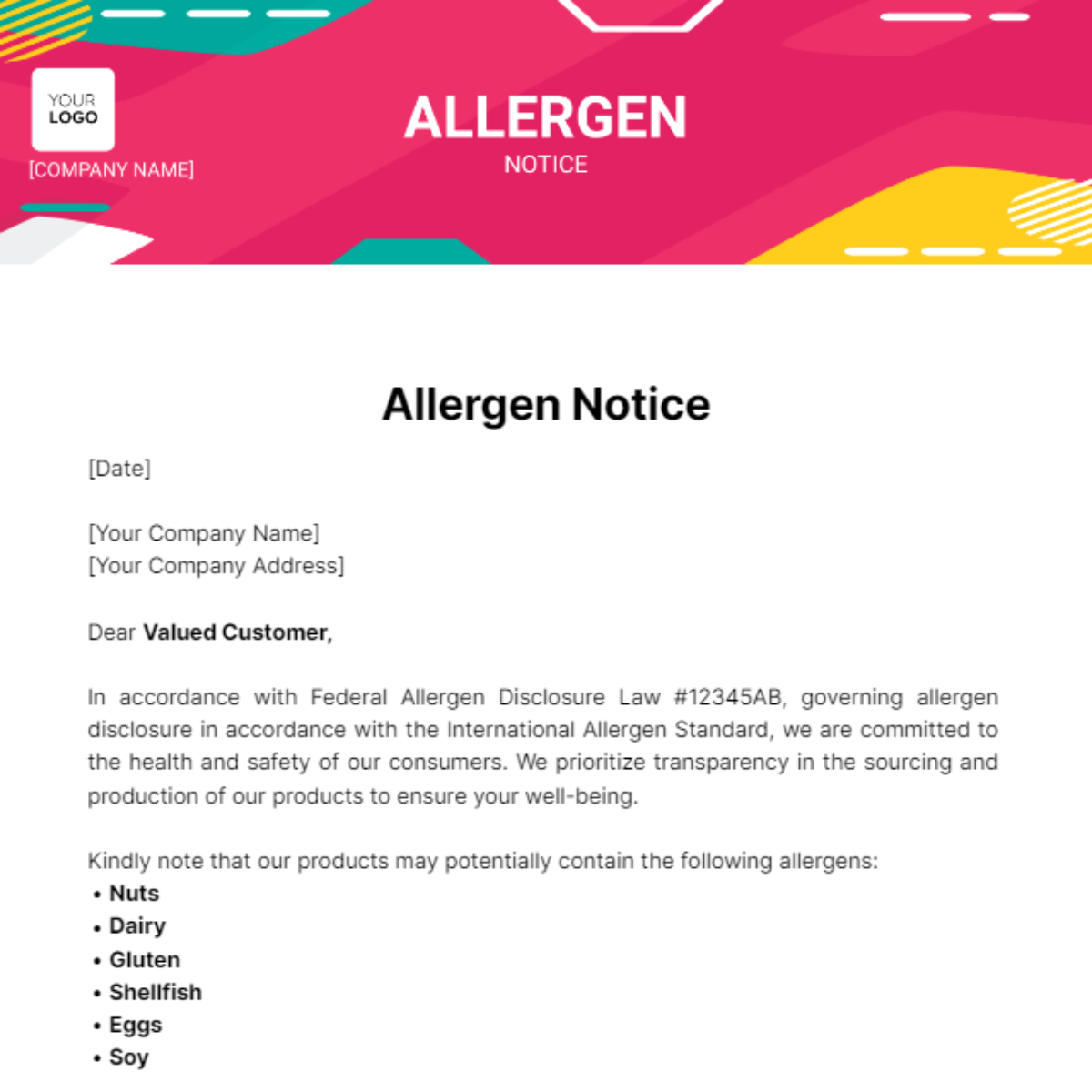
Free Allergen Notice Template to Edit Online
Allergen Statement Download Free Template
Allergen & Sensitivity Information Form Product Fish On Can Pack Size
Allergen Statement PDF
Allergen Statement Cam PDF
Allergen Statement of TSPP PDF

Allergen Statement Allerglee Allergy Friendly Baking
Allergen Statement PDF
Allergen Statement PDF PDF
Allergens May Be Inhaled, Ingested (Eaten Or Swallowed), Applied To The Skin, Or Injected Into The Body Either As Medication Or Inadvertently By An Insect Sting.
The Allergic Reaction Occurs If The Person Inhales,.
Allergies Happen When The Immune System Reacts To A Foreign Substance That Gets Inside The Body.
Symptoms And Treatments May Vary Depending On The Type.
Related Post: